
Spring 1
Here is a helpful guide to what we will be learning this half-term.
Our topic this term is….
'Toys Through Time'
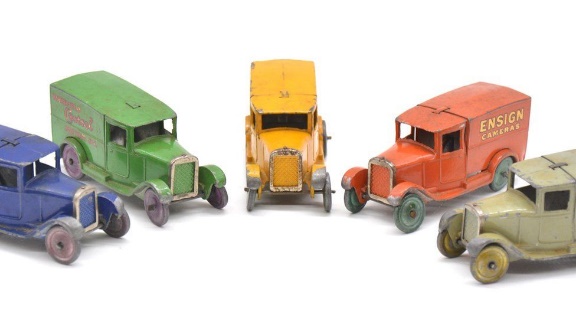
We are looking forward to an exciting half term in Year One. We will be continuing to learn about what life was like in the past as we explore how toys have changed over time. In English, we will write stories about animals, which will link to our work in Science.
English – Monkey See, Monkey Do
The model text for this unit will be ‘Monkey See, Monkey Do’. The children will practice verbally retelling the story and take part in drama activities to deepen their understanding of the events and key vocabulary. We will then write our own version of the story, inspired by ‘The Lighthouse Keeper’s Lunch‘ by Ronda Armitage. We will be focusing on the opening and ending of the story and also on how to describe action within the story.
Key vocabulary: full stop, finger spaces, capital letters, verb, adverb, setting, time, day, opening, ending, time adverbial.
Maths
Place Value (Within 20)
In our place value work, we will develop a deep understanding of each number from 10-20, look at how 10 can be represented as a one base 10 piece, explore how numbers to 20 can be seen as 1 ten and some ones, find 1 more or less than numbers to 20, use number lines to 20 to solve problems and make estimates, compare numbers to 20 and order numbers to 20.
Addition and Subtraction (within 20)
In our addition and subtraction work, we will explore addition by counting on from a given number within 20. We will use number bonds and related facts when adding within 20, as an alternative to counting on. We will explore number bonds to 20, drawing on our knowledge of number bonds to 10. We will learn about doubles and then use these facts to work out near doubles. We will subtract within 20, drawing on our knowledge of number bonds. We will build on the language of subtraction, recognising the subtraction symbol from earlier learning and using it within 20. We will learn about finding the difference and explore it as a form of subtraction. We will look at how addition and subtraction relate to each other, considering the addition and subtraction fact families for numbers within 20.
Key vocabulary: before, after, full, tens, ones, base ten, greater, less, same, different, digit, more, less, first, last, estimate, half-way, greater than, less than, equal to, add, addition, number sentence, jump, count, count on, bar model, first, next, then, equal, tens, ones, fact, bond, double, near double subtract, part-whole, count back, difference, smaller, fact family, order, undo,1-digit number, 2-digit number, group, total.
Science
Winter Planting
The children will explore plant growth. They will plant seeds and observe any changes in growth over the rest of the term. Due to the time of year, they will grow plants inside the classroom before transferring them outside and replanting when it is warmer. Within this step, the children will identify and name the basic parts of a plant to help them use correct terminology when observing changes in their own plants.
Key vocabulary: plant, seed, roots, stem, leaf, flower, grow, winter, change.
Animals
We will be learning about different groups of animals such as mammals, birds, fish, amphibians and reptiles. We will then use this knowledge to compare and group animals. We will also be learning about herbivores and carnivores.
Key vocabulary: animal, mammal, fur, pet, wild mammal, bird, wings, beak, webbed feet, feathers, flipper, fish, tail, scales, gills, fin, amphibian, frog, toad, newt, reptile, lizard, crocodile, turtle, carnivore, sharp teeth, herbivore, plant, vegetable, fruit, plant, leaf, flower, stem, roots, seed, soil.
Computing – Programming: Algorithms Unplugged
We will be using an unplugged approach to explore algorithms, decomposition and debugging in contexts that are familiar, such as dressing up and making a sandwich. We will be learning why instructions need to be very specific.
Key vocabulary: algorithm, bug, automatic, chunks, clear, code, debug, decompose, decomposition, device, directions, input, instructions, manageable, motion, order, organize, output, precise, programming, problem, robot, sensor, sequence, solution, specific, steps, tasks, virtual assistant
Religion and Worldviews - Why should we care for the world?
Building on their understanding of creation stories, the children will explore beliefs about the relationship between humans and nature.
Key vocabulary: ahmisa, belief, bible, Brahma, Brahman, care, Christian, creation, creator, Earth, environment, gift, Hundu, Humanist, Jewish, mitzvot, ownership, qualities, responsibility, stewardship, Torah,
Design and technology – Making windmills
The children will design a windmill to meet the needs of the user following design criteria. They will explore how to make a stable structure and make functioning sails/blades to attach to the structure and improve their windmill as needed by evaluating it.
Key vocabulary: base, centre, design, equal, evaluate, middle, rotate, rotor, rotor blades, sails, same, stable, strong, structure, test, weak, wind, windmill.
Music – Sound Patterns (Fairytales)
Through fairy tales, the children will be introduced to the concept of sound patterns (rhythms). They will learn to clap along to repeated words and phrases, creating rhythmic patterns to tell a familiar fairy tale.
Key vocabulary: character, voice, sound pattern.
History – How have toys changed?
We will sequence toys into a physical timeline. We will have the opportunity to investigate artefacts from the past and begin to pose questions. We will learn how teddy bears have changed and ‘interview’ an old teddy bear before considering what toys may be like in the future.
Key vocabulary: artefact, century, decade, different, evidence, living memory, memory, modern, now, past, present, remember, similar, source, special.
PSHE - Safety and the changing body
The children will learn how to respond to adults in different situations. They will begin to understand the difference between acceptable and unacceptable physical contact. We will develop an understanding of what to do if lost and how to call the emergency services. We will identify dangers at home and how these can be avoided and learn that there are people in the local community who help to keep us safe.
Key vocabulary: accident, drug, emergency, medicine, physical contact, polite, respect, role, trust.
PE
Outdoor PE: Multi-skills
We will focus on running with control and being able to change direction. We will play reaction games such as tag or chase and develop our spatial awareness. We will throw balls and beanbags at targets. We will practice kicking a stationary ball and catching small medium balls. We will begin to dribble a ball.
Key vocabulary: run, direction, slow, fast, speed, throw, aim, underarm, target, kick, dribble.
Indoor PE: Dance Party Games
We will learn to copy a range of movements and repeat them back. We will practice performing movements at a range of speeds. We will be able to link two or three movements together. We will perform to a clear beat in a piece of music. We will listen to a piece of music and then improvise to it. We will perform a series of movements learnt in a group.
Key vocabulary: beat, rhythm, link, perform, copy, repeat, fast, slow, speed, improvise.
Important dates:
Teacher Training Day (children are not in school) – Monday 5th January 2026
Term begins – Tuesday 6th January 2026
Last day of the half term – Thursday 12th February 2026
Teacher Training Day (children are not in school) – Friday 13th February 2026